Shiloh's Story
The History of Shiloh
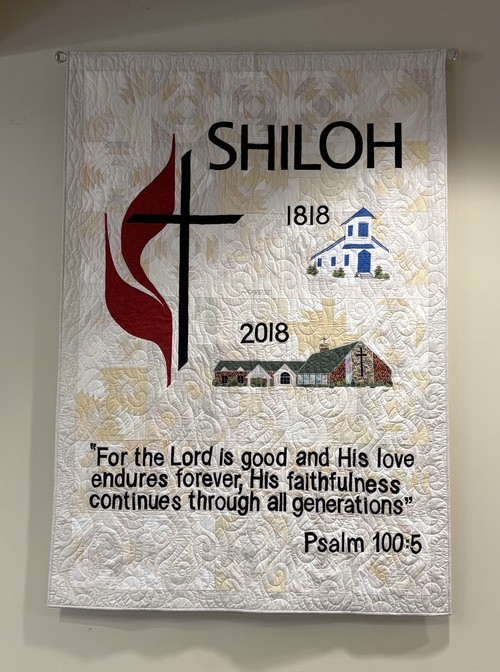
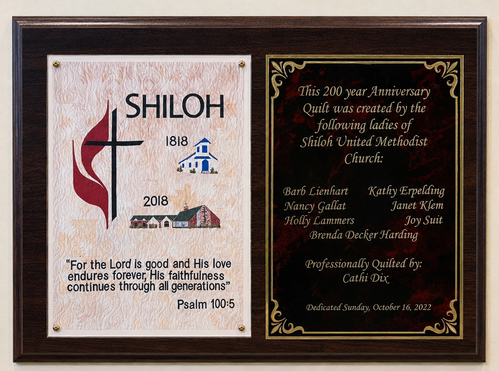
For more than 200 years, Shiloh United Methodist Church has been part of the life and faith of Delhi Township. What began as a small gathering of neighbors has grown into a lasting community rooted in worship, service, and care for one another.
Shiloh’s story began in 1818, when local families met in their homes for Methodist class meetings. The congregation grew, and on Oct. 14, 1828, Peter Williams deeded to the Trustees an acre of land for a church building and cemetery, for $30.00. The first church building was completed on Jan. 22, 1831, at a cost of $303.70, and still stands today on Anderson Ferry Road, making it one of the oldest church buildings in Hamilton County on its original site.
In its early years, Shiloh followed the Methodist tradition of itinerant ministry, welcoming circuit riders and student ministers who traveled to serve rural congregations. Like many small churches, Shiloh faced financial challenges over time. The church endured because of the faithfulness, generosity, and determination of its members, who believed deeply in the importance of keeping their church alive.
The early 1900s brought renewed growth. In 1924, Shiloh became part of the Ohio Conference of the Methodist Church and received its first appointed minister. During this time, the building was updated with electricity and other improvements to better serve the congregation and the community.
For more than 200 years, Shiloh United Methodist Church has been part of the life and faith of Delhi Township. What began as a small gathering of neighbors has grown into a lasting community rooted in worship, service, and care for one another.
Shiloh’s story began in 1818, when local families met in their homes for Methodist class meetings. The congregation grew, and on Oct. 14, 1828, Peter Williams deeded to the Trustees an acre of land for a church building and cemetery, for $30.00. The first church building was completed on Jan. 22, 1831, at a cost of $303.70, and still stands today on Anderson Ferry Road, making it one of the oldest church buildings in Hamilton County on its original site.
In its early years, Shiloh followed the Methodist tradition of itinerant ministry, welcoming circuit riders and student ministers who traveled to serve rural congregations. Like many small churches, Shiloh faced financial challenges over time. The church endured because of the faithfulness, generosity, and determination of its members, who believed deeply in the importance of keeping their church alive.
The early 1900s brought renewed growth. In 1924, Shiloh became part of the Ohio Conference of the Methodist Church and received its first appointed minister. During this time, the building was updated with electricity and other improvements to better serve the congregation and the community.
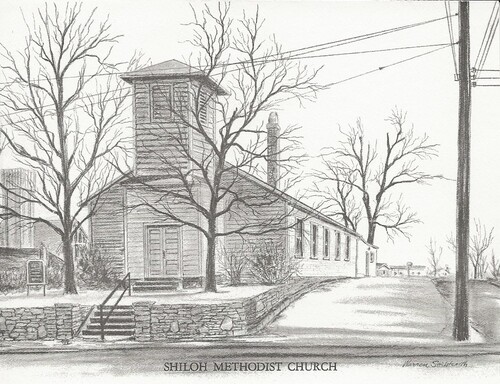
This line drawing by Warren Stichtenoth can be seen hanging on a wall inside the church
Shiloh Today
Our current sanctuary, built in 1958, has been a home for worship and fellowship for decades. Today, Shiloh continues to honor its past while looking toward the future. Thoughtfully planned renovations reflect a commitment to stewardship, accessibility, and welcoming future generations.
Shiloh United Methodist Church remains a community grounded in faith, guided by love, and committed to serving others—just as it has been since the beginning. We invite you to join us and see what we’re about.
Our current sanctuary, built in 1958, has been a home for worship and fellowship for decades. Today, Shiloh continues to honor its past while looking toward the future. Thoughtfully planned renovations reflect a commitment to stewardship, accessibility, and welcoming future generations.
Shiloh United Methodist Church remains a community grounded in faith, guided by love, and committed to serving others—just as it has been since the beginning. We invite you to join us and see what we’re about.